“Take a look at a castle. Any castle. Now break down the key elements that make it a castle. They haven’t changed in a thousand years.” – Robert Redford as Lt. Gen. Eugene Irwin, The Last Castle
In the the world of Military Occupation Specialties, the Combat Engineer is referred to as the jack of all trades who is a master of none. It makes for an endearing descriptor, but is not entirely true.
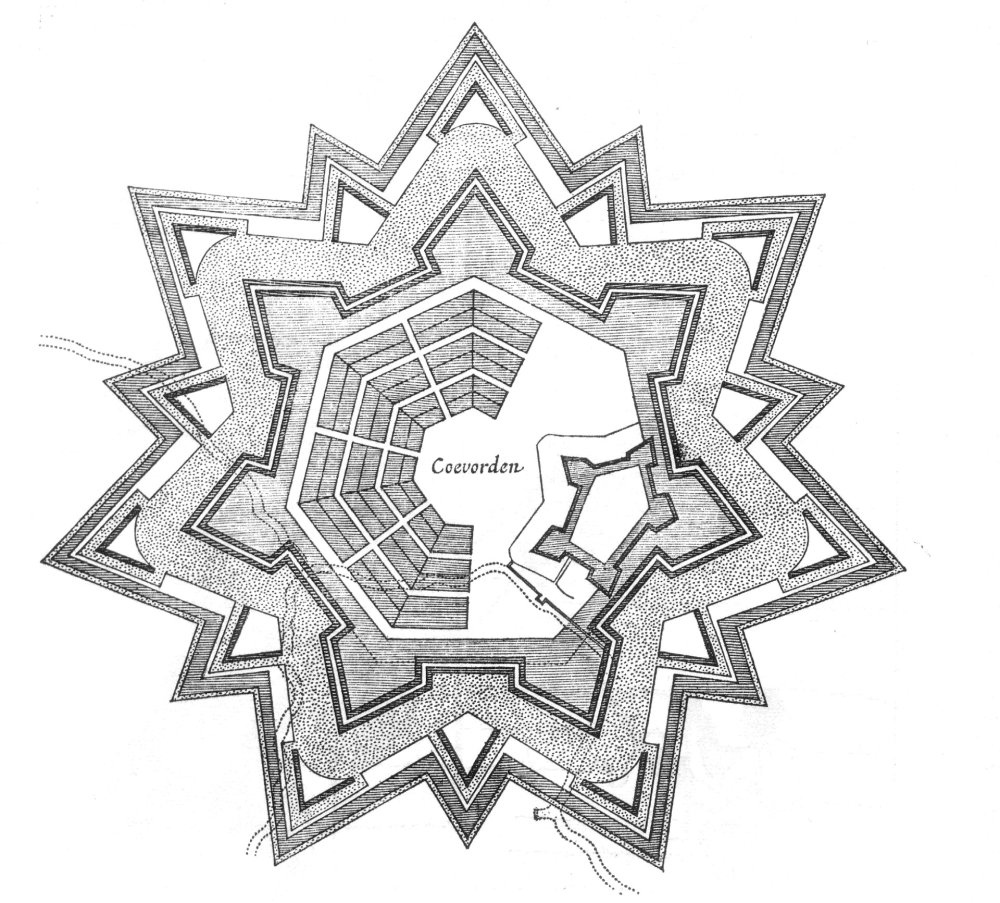
Take a look at the symbol of the combat engineer: the castle. That castle represents the engineer’s purpose in war, left fundamentally unchanged since time immemorial. They are masters of their trade, and their trade is siegecraft.
It is undeniable that today’s combat engineer bears the burden of providing an exorbitant number of capabilities to the force commander, but those capabilities are not independent of and unrelated to one another; they all revolve around the siege and defense of the fortress.
 Marine Corps Warfighting Publication 3-17 describes the role engineer in the modern Marine Air Ground Task Force as providing a “unique combination of diametric capabilities.” It states that “Today, the combat engineer brings both constructive (e.g., building bunkers, providing utilities) and destructive (e.g., demolition, breaching) support capabilities to the battlefield.”
Engineer operations are broken down into four main categories: Mobility, Counter-Mobility, Survivability, and General Engineering.
Mobility is the breach – mobility means opening the fortress and reducing obstacles that get between ourselves and taking our objective.
Counter-mobility is the wall, gate, and moat – Counter-mobility means implementing our own obstacles in order to block enemy movement; delay the enemy’s advance, trading space for time; to turn the enemy’s forces toward a direction or location of the defender’s choosing; to disrupt the enemy’s formations and ability to act cohesively; and to fix the enemy in a disadvantageous position where they can be destroyed.
Survivability is the embrasures – Survivability means providing cover and concealment to friendly forces, that they might engage the enemy with less risk of sustaining casualties in engagement.
General Engineering is the food-stores, guardhouse, chapel and well – General Engineering means providing those facilities necessary to sustain the garrison.
Thus, the combat engineer is responsible for all aspects of carrying out and repelling the siege; providing the diametric capabilities of construction and destruction of the fortress.

In the film The Last Castle, Robert Redford as Lt.Gen. Irwin says “take a look at a castle. Any castle. Now break down the key elements that make it a castle. They haven’t changed in a thousand years. 1: Location. A site on high ground that commands the territory as far as the eye can see. 2: Protection. Big walls, walls strong enough to withstand a frontal attack. 3: A garrison. Men who are trained and willing to kill. 4: A flag. You tell your men you are soldiers and that’s your flag. You tell them nobody takes our flag. And you raise that flag so it flies high where everyone can see it. Now you’ve got yourself a castle.”
The fortress, though, is not simply a structure of brick and stone; it represents the entirety of a force’s area of influence, within which that force maneuvers and operates. The walls of the fortress ebb and flow like an ocean tide, shifting too and fro as each force fights for position against the other. The fortress, in the ancient world and today, means control. The walls of nee fortress might envelope and strangle those of it’s competitor, but so long as the enemy garrison remains alive and their flag raised, they have ground; And so long as they have ground, they have a castle.
In the modern battlespace, the besieger himself is besieged. Forces are constantly attempting to hold their own walls in one area and exploit enemy gaps in another; Pushing forces forward to take enemy ground while reinforcing what they already have. This is the world that the modern combat engineer, more so than his ancient predecessor, is responsible for. With Modern disaggregated operations, the battlespace itself is a labyrinthian fortress with walls constantly being built and breached; mobility and counter mobility are to manuever warfare what black and white are on a chessboard, and engineers, being responsible for providing both, truly represent the gate-keepers of the battlefield. Engineers build the castle walls and the saps used to take them; they are jacks of all trades, and masters of siegecraft.
 Wistful Thoughts